This blog offers informed opinions and perspectives relating to nascent technologies in data-centric engineering. Professor Ron Kenett discusses his recent DCE webinar, which covers how statistical tools can be used to build Digital Twins in engineering applications.
New developments in sensing technologies, big data, storage, and advanced analytics, all affect modern systems engineering. In the most recent DCE webinar, we discuss changes at a conceptual level to consider design optimisation and performance engineering — while aiming for responsive monitoring, diagnostic, prognostic, and prescriptive capabilities. We present a new modelling approach, stochastic emulators, and show how emulators can be used to complement finite element and computational fluid dynamic computational models. An organising framework for this conceptual shift is provided by digital twins, introduced through case studies.
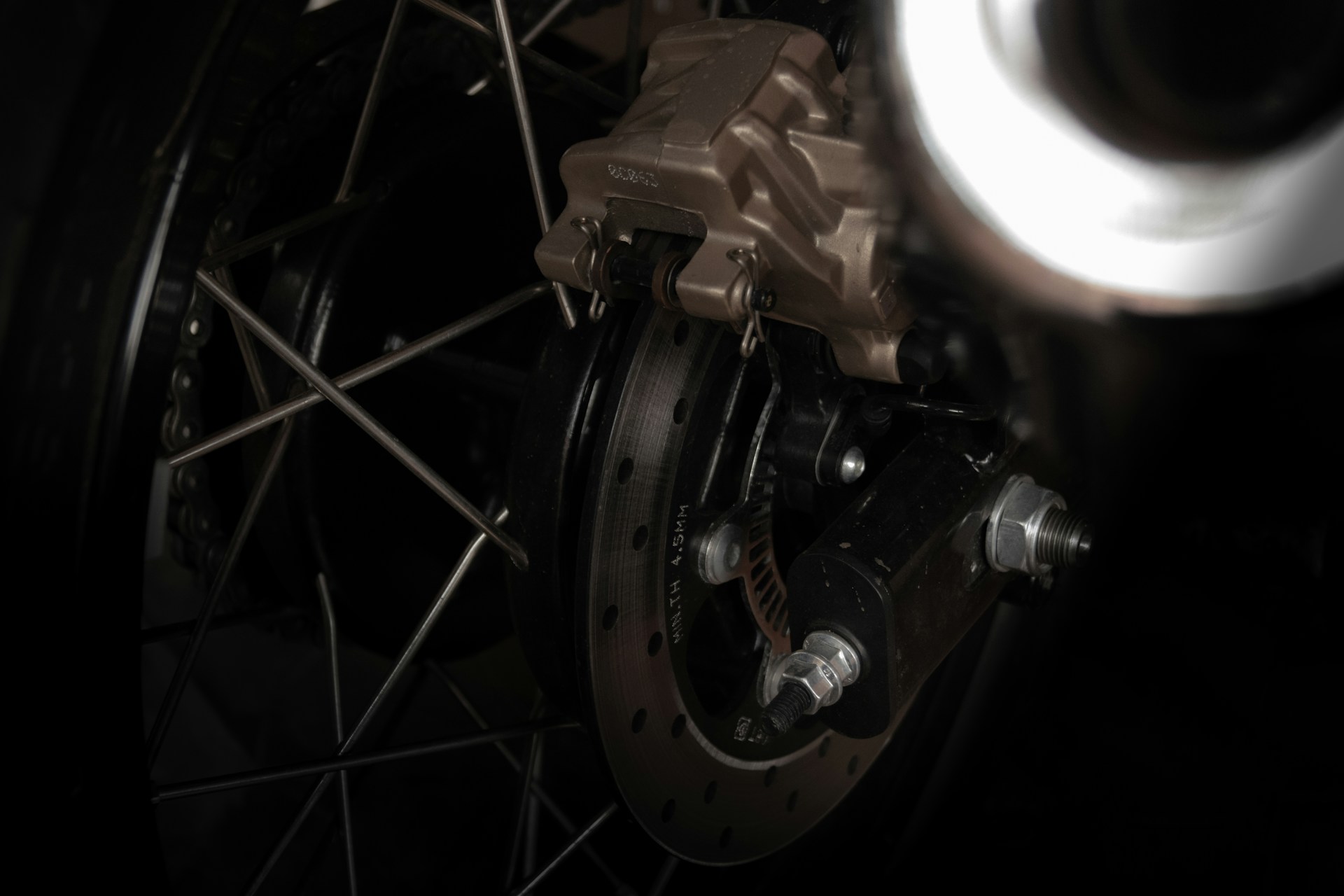
The first study is based on digital twins of train locomotives. The approach combines individual representations of brake systems, safety valves, and suspension frames. These digital twins enable monitoring, diagnostic, prognostic and prescriptive analytics of locomotives, to enhance safe and cost-effective condition-based maintenance. A second, more pedagogical example, is based on a combustion piston simulator that derives cycle time performance, after setting up seven input variables. The piston is introduced and integrated in notebooks offering code in R, JMP and Python. These notebooks use the piston simulator to cover topics such as statistical process control and statistical design of experiments.
We refer to the piston simulator to demonstrate the concept of a stochastic emulator — where a model is used, with variability in the inputs — to generate a model of the system variability. Typically, this representation is derived from hyper Latin cube computer experiments and Gaussian process models.
An essential characteristic of stochastic emulators is that they provide surrogate models of finite element methods (or dynamic computations) adequate for operational digital twins. Investing in digital assets requires a refocus of engineering efforts, from engineering of design to engineering of performance. We believe that this refocussing will characterise engineering science in future years. The webinar provides a glance at the potential performance capabilities.
Competing Interest: Professor Ron Kenett is Senior Research Fellow at the Samuel Neaman Institute, Technion, Haifa, Israel, Chairman of the KPA Group, Israel, Chairman of the Data Science Society at AEAI and Research Professor at the University of Turin, Italy.
Keywords: Physics-informed machine learning; Digital Twin Technology; Systems thinking; Data assimilation; Structural Health Monitoring
This is the blog for Data-Centric Engineering, an open-access journal published by Cambridge University Press and supported by the Lloyd’s Register Foundation. You can also find us on LinkedIn. Here are instructions for submitting an article to the journal.